
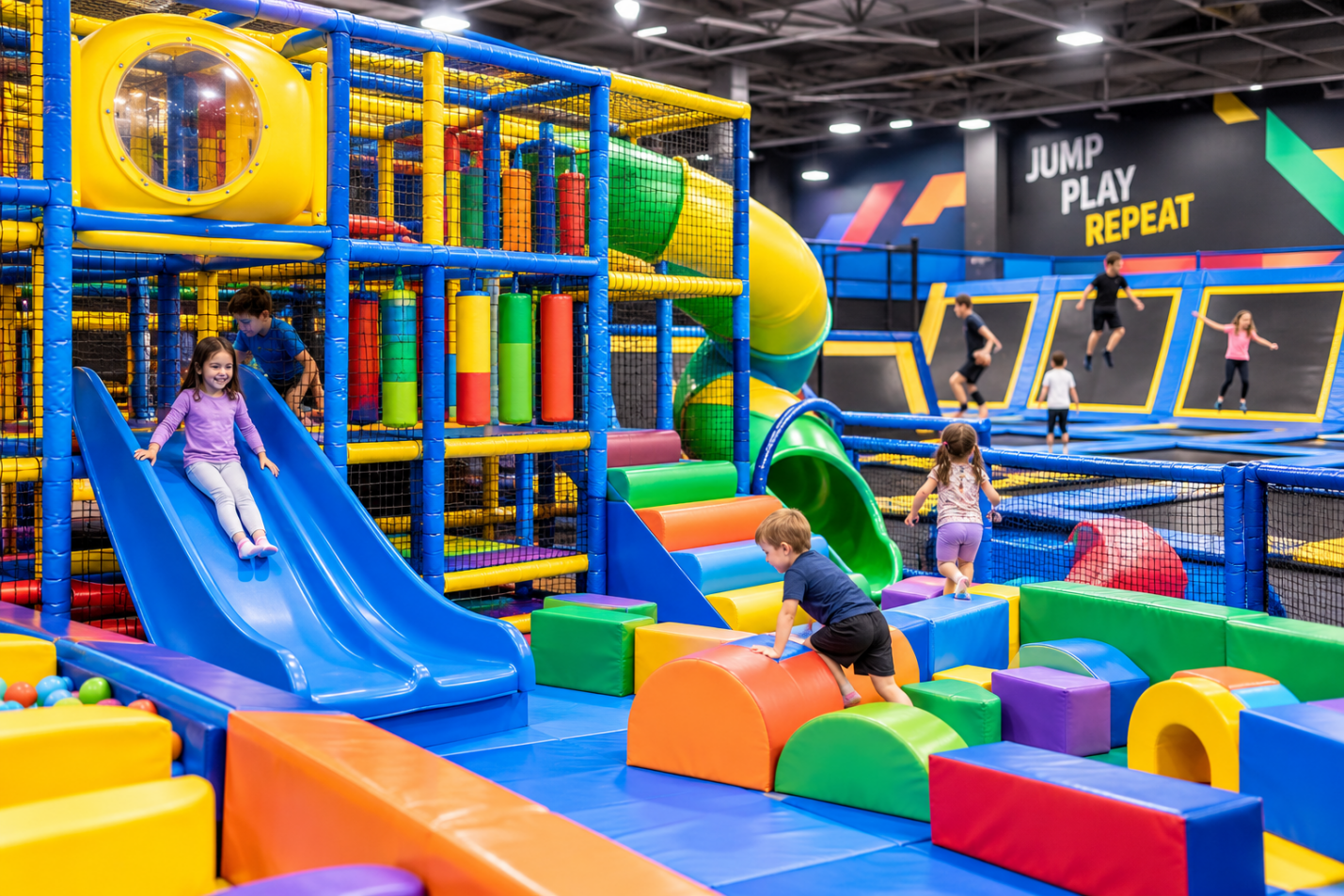
Adding soft play to a trampoline park sounds simple until you actually start shopping for equipment. The jump zones already take a beating from daily foot traffic, and whatever soft play area goes in next to them needs to survive the same volume without becoming a maintenance headache six months in. Choosing the right commercial soft play equipment — not just any soft play equipment, but structures actually built for high-traffic commercial use — is what separates a soft play addition that pays for itself from one that turns into a constant repair bill.
Not All Soft Play Equipment Is Built the Same
There’s a meaningful difference between soft play designed for occasional use at a small daycare and commercial soft play built to handle the traffic volume of an established trampoline park. Foam density, vinyl cover thickness, seam construction, and frame material all vary significantly across price points, and the cheaper end of the market simply isn’t engineered for hundreds of kids climbing, sliding, and bouncing on it every single day. Operators evaluating commercial soft play for a trampoline park setting should treat it the same way they’d treat any other high-traffic commercial fixture — durability specs matter as much as the layout itself.
Durable Soft Play Equipment Pays for Itself
Durable soft play equipment costs more upfront, and it’s tempting to shave that number down when the trampoline courts already represent the bulk of the build budget. But soft play structures in a trampoline park see traffic levels closer to a full-time commercial gym than a part-time play corner, and lower-grade equipment shows wear — torn vinyl, compressed foam, loosened seams — within months rather than years. Reinforced stitching, commercial-grade foam, and welded or bolted connection points cost more at purchase but typically extend the usable life of the structure by several years, which matters a great deal when the alternative is replacing sections annually.
Soft Play Structures That Fit the Space You Actually Have
Trampoline parks are rarely designed with a soft play addition in mind from day one, which means most operators are retrofitting soft play structures into leftover space — a corner near the entrance, a section behind the party rooms, or an underused area near the concessions counter. Modular soft play structures work well here because they can be configured to fit an irregular footprint rather than requiring a dedicated rectangular room. Look for systems built around individual foam and vinyl components that bolt or interlock together, since that flexibility lets the structure follow the shape of the space instead of forcing a redesign of the building itself.
Designing a Genuine Commercial Play Area
A commercial play area needs to do more than just look inviting — it needs a layout that supports supervision, cleaning, and safe separation from higher-energy zones like the trampoline courts. Clear physical boundaries, easy-to-wipe surfaces, and enough open floor space around the structure for staff to move through during cleaning and inspection all matter more in a commercial setting than they would in a home or small daycare install. Operators should also think about flow: where families enter the soft play area, where they exit, and how that traffic pattern interacts with foot traffic heading toward the trampoline courts or party rooms.
Soft Play Safety Standards Operators Should Know
Soft play safety in a commercial setting isn’t optional, and it goes well beyond padding the corners. Reputable manufacturers build to recognized commercial playground safety standards covering fall height, foam density and firmness, entrapment gaps, and structural load ratings. Before purchasing, operators should confirm the equipment carries documentation showing compliance with the relevant commercial safety standards for their region, along with clear maintenance and inspection guidelines from the manufacturer. Insurance carriers increasingly ask for this documentation directly, so having it on hand from day one avoids delays when it’s time to renew or update a policy.
What Soft Play Installation Actually Involves
Soft play installation is more involved than simply setting foam shapes on the floor. Larger commercial structures typically require anchoring to the subfloor, careful spacing from walls and other attractions, and coordination with the building’s existing layout — sprinkler clearance, electrical outlets, and HVAC vents all need to be accounted for before installation day. Most reputable suppliers offer professional installation as part of the purchase, which is worth paying for given how much a poorly anchored or improperly spaced structure can affect both safety and day-to-day usability. Operators managing the installation themselves should build in extra time; rushed installs are where corners get cut on anchoring and spacing.
Budgeting for the Full Lifecycle, Not Just the Purchase Price
The sticker price on a soft play structure is only part of the real cost. Ongoing maintenance, periodic deep cleaning, occasional part replacement, and eventual refurbishment or upgrade all factor into the true cost of ownership over a five-to-ten-year period. Operators who budget only for the initial purchase often get caught off guard by these recurring costs later. A more accurate approach treats soft play the way trampoline park operators already treat their jump equipment — as a capital investment with an ongoing maintenance budget attached, not a one-time purchase that takes care of itself.
Soft play can be one of the best additions a trampoline park makes, but only when the equipment itself is chosen with the same seriousness operators already apply to their trampoline courts. Prioritizing genuinely commercial-grade, durable soft play equipment, planning the installation properly, and budgeting for the full lifecycle rather than just the purchase price all make the difference between an addition that holds up for years and one that needs replacing far sooner than expected.